Monday, August 24, 2009

Template Of A Service Letter


Luis Yapis:
Conaie promotes political defense of indigenous peoples in Peru
spacer
spacer
 Conaie promueve defensa política de pueblos indígenas de Perú

CONAIE calls on states to practice a policy for human development, but not in neoliberal terms.

The Ider of CONAIE, Luis Yapis, reiterated the support of the Peruvian indigenous organization. (Photo: teleSUR)
spacer
TeleSUR _

09/06/2009 Through their solidarity and a strategic alliance, the Confederation of Indigenous Nationalities of Ecuador (CONAIE) promotes the political defense of indigenous peoples in the Peruvian Amazon, that was last weekend victims of police brutality at a protest by natives to protect natural resources and their ancestral lands.

This was said the leader of CONAIE, Luis Yapis, who in an interview with Telesur also reiterated the rejection of that organization indigenous to the Peruvian government's repressive attitude against the indigenous peoples of the Amazon region of the South American country .

CONAIE Tuesday condemned "state-sponsored violence in Peru from Peruvian indigenous brothers" and called on the international community to punish those responsible.

organization Ecuadorian indigenous denounced also the "deplorable human rights situation that exists in the Peruvian Amazon," according to a statement released the institution in a press conference.

Yapis, in dialogue with teleSUR described as criminal and inhuman situation of indigenous peoples in Peru.

A complete text of the interview:

What do you think Conaie address on this sad fact that indigenous brothers living in Peru?

CONAIE is an autonomous, private, social and human promotion. In view of this, it is our humanitarian obligation to show solidarity with the indigenous brothers who go through a review, criminal and inhuman situation in Peru.

We also sympathize because conflicts in 1941 had a political division between Peru and Ecuador because our limit was up the Amazon River and have relatives in different ethnic groups that live in the area.

Conaie know that had already held meetings with national movements and non-governmental organizations have established "any action or decision until now?

Well, we have no relations of any kind financial support, but we have made an autonomous organization at the level of Latin America, and why not say, in neighboring countries of Colombia, Peru, Venezuela and Ecuador.

We have a political goal, we have a political endeavor and a friendship, as human beings can relate and lead to development of a pluri building and multiculturalism in Latin America, where indigenous peoples are settled respectively.

Besides the solidarity Part of you have had a rapprochement with other indigenous organizations in Peru or other Latin American level to join forces?

Yes, we've had conversations, so we have an organization that is the Cuica, which is an organization uniting of several neighboring countries of the Southern Cone. In view of this we have relations with Colombia, with the nationalities of Bolivia, Peru, Ecuador, Venezuela and Brazil, then try to show solidarity by making a political defense, a policy that states actually practice for humanitarian development in this century and not that is practiced as a neo-liberal.

Peruvian President Alan Garcia has said that these actions are nothing but a conspiracy against the Peruvian state and not give in to blackmail What do you think?

Well, we also know we are not Peruvians, but we know through different media that President Alan Garcia, with the respect they deserve, again tried to indoctrinate, to the presidential directive on plot demands of transnational corporations, because they want to exploit, extract, trade in natural resources such as oil and mining, a large area of \u200b\u200bland Amazon where indigenous peoples are settled in Peru.

Do you already have sent a representative of CONAIE as a gesture of solidarity to Peru and the place where these events are being generated?

Well, not us so far. For five months ago, in January, we had a partnership of coordination, of a political strategy rather than neo-liberal, but to be participants, builders of a political fight in modern life that is practiced on an equitable basis with respect, especially, nationalities and most of all human life and has an equitable development socioeconomic, political.

A political alliance to promote respect for traditional settlements, which is established in the Constitution of Peru and also in treaties and international agreements and declared by the United Nations human rights of indigenous peoples.

How Much Do I Pay For Makep Brushes

"The indigenous people of the Amazon do not ask anything to the government because he never supported us," Lopez said in an interview


Lima, August 23. Teresita Lopez is hidden. Somewhere in the Amazon is the most you are willing to reveal about his location now that the Peruvian government has in the list of most wanted.

Lima authorities accuse of inciting murder, sedition and insurrection. She says that it is all nonsense, all I have done is to protect the rights of the indigenous Peruvian Amazonia, composed of about 350 thousand people and help them safeguard their traditional way of life threatened by a president who is committed to open the Amazon to mining companies, timber and oil groups.

The Amazon tribe asks nothing the government because it never supported us, "Lopez said in an interview. The only thing we demand is respect for our way of life and our right as citizens to live in our land, which we were born and where you want to die .

Tensions in this corner of South America appeared on the international radar last June, when there was a massacre that became known as the Tiananmen Amazon.

Dozens of people died and hundreds were injured when the Peruvian police fired on crowds demonstrating on a highway near the northern city of Bagua Grande against government plans to sell Indian land to foreign corporations.

This degenerated into a political crisis for President Alan Garcia. His Simon Yehude popular prime minister resigned in apparent protest over the way they handled the matter. Now, more than two months after the tragic events, the still-shaky government of President has focused attention on revenge.

Lopez, community leader of the tribe Yanesha, is one of the most recognized leaders of the Indians of the Amazon and has been forced into hiding. Risks a life sentence if arrested and convicted.

We have been accused of sedition, rebellion and insurrection said. These charges were announced at a press conference, which is a violation all legal proceedings. For all intents and purposes, government leaders after us, to work for indigenous people and express their demands .

Peruvian authorities accuse of being responsible for inciting the killing of Bagua on 5 June, but Lopez said that she was that day in Lima, which is more than a thousand 400 kilometers of Bagua Grande.

charges against him are based more on a televised press conference she gave in May in the capital and which, prosecutors say helped trigger the riots. I have been charged and has turned an arrest warrant against me by sitting behind a table during a press conference says Lopez. not even say anything. Imagine if he had opened his mouth!

The woman, 48, originally from Oxapampa region in central Peru, says it has been hosted by brothers, family and colleagues of the indigenous movement .

Been advised to stay hidden or asylum seeker, but do not try to go out to clear his name. I have no possibility or guarantee to defend legally because the Executive Branch is interfering with the functions of the Judicial said.

At the heart of the dispute are the 13 laws revealed President Garcia last year. These threaten to make available to timber companies, foreign mining and oil 67 million hectares of virgin Amazonian forest to be exploited. This enraged the Indians, who staged protests demanding that laws be repealed. Four of the 13 controversial laws have been discarded, but nine of them remain untouched.

Stephen Corry, director of Survival International (Survival International N T), a lobby based in London that works for tribal organizations said the case of Teresita clearly illustrates what happens currently in Peru. García's government is determined to sabotage the indigenous movement by forcing their leaders into exile on pain of ending up in prison , Corry said.

Alberto Pizango, leader of the Interethnic Association for Development of the Peruvian Rainforest (AIDESEP), a group representing 56 tribes, was granted asylum in Nicaragua along with two of his colleagues as a result of violence and as victims of political persecution. The Central American nation believes that these men have no chance of getting a fair trial in his country. The number of Amazonian Indians who face charges related to the killing which they attribute to the police has soared up to 120.

As human rights groups, among those being persecuted are 48 Indians who are still hospitalized and treated for injuries suffered at the hands of security forces who opened fire in June. Armed guards monitored the medical facilities to ensure that indigenous Wampi Aguaruna and can be arrested and imprisoned in the medical discharge.

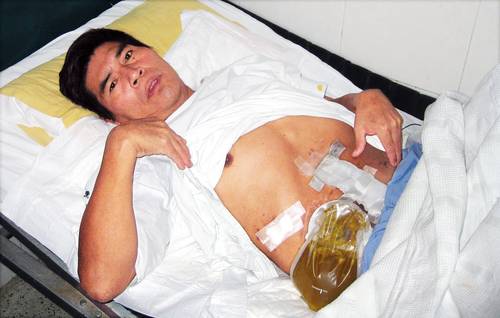
Santiago Manuin Indian leader received four bullets in the stomach in Bagua. Still in bed with a catheter that drains the intestine, while the door of his room is guarded by five armed guards with rifles AK-47 .

Manuin said last week that there justice for indigenous people. The government gives more value to police us and refuses to acknowledge his mistake .

Peru insists on an official level that only 33 people died in Bagua, of which ten were protesters and 23 police officers were armed observers say that many members of tribes whose whereabouts were unknown until today. Reporters at the scene estimated that the balance was at least 60 dead.

The Peruvian government has faced widespread international criticism for the killings. His minister of justice was brought before the Human Rights Committee of the UN in Geneva this August, and a United Nations special envoy for Indigenous Rights called for an independent investigation of the facts.

Belatedly, given the speed with which they are filing charges against indigenous leaders, Peru this week finally announced actions against two armed police generals who were in Bagua who are accused of murder, along with 15 other soldiers of lower rank .

remains to be seen whether this will be enough to appease opponents of Garcia and repair its reputation. Since the events in Bagua, the president's approval in polls has fallen by 25 percent, and said that his former ally, Yehude Simon is considering making a hostile campaign to keep the presidency. © The Independent

Translation: Gabriela Fonseca

Sunday, August 16, 2009

Masterbation With Other Guys

Repression in Peru: History of Latin America ethnocide Marcos Roitman Rosenmann

XXI Century holds unexpected surprises, political transvestites may end with the dignity and transform, once anti-imperialist and nationalist advocates of transnational corporations. This is the case of Alan García and his government.

no major differences, the ways to strengthen the power of these clusters are reminiscent of those used in the post-independence period to pay for liberal reform. Concessions for railways, bridges, dams, roads. Money and corruption to satisfy the political elite and military bases to reduce the danger of nationalist coups. Was the way to achieve the objectives: political control, economic and military of a country. The Peruvian government exercising these strategies today confirms the repression of their indigenous people. If in the nineteenth century carried out the removal of the territories belonging to indigenous peoples to meet the desire for accumulation of local oligarchies and nineteenth-century imperialism, represented by the United States and Britain, now sell their property for the benefit of multinationals and the new oligarchy.

however, was never an easy task for the ruling classes to implement these decisions. There are now five hundred years of resistance. But the tradeoff has been to use the military as a deterrent weapon. The first campaigns of the professional armed forces in Argentina, Chile, Mexico, Peru, Colombia, Paraguay, among others, were faced with the Araucanian pehuenches, Quechua, Aymara, Patagonians chichimecas or Pampeña. They were the first internal enemies. The killings have gone down in history. Oligarchies boasted of such strategies for robbing the wealth of their peoples. Also, the shortages labor led to the indigenous peoples to a farm in conditions of near slavery, extermination contributory cause a slow but steady. The table is widespread throughout Latin America. Brazil, Mexico, Guatemala were lower their Aboriginal populations the same speed as they did during the conquest. In their ideologues and promoters are not wrinkled her conscience to adjectives such practices as a diatribe between "civilization and barbarism." Today Alan Garcia speaks of the battle for progress. Expanding the boundary of the farms and make their own brand new landowners were one and the same thing. Laws against vagrancy were the argument to retain the estates the indigenous population. During these two centuries of independence have established draconian laws against the rights of indigenous peoples. Under the pretext of offering them a better world, they are forced to sell their land, move or deny property rights in favor of free markets. If they are obedient and submissive, in exchange for ceding land plots were relocated or transformed into cooperatives, in return are promised to build a health clinic open two hours a day, a school without means, enjoy electricity prices usury and buy GM seeds. A demonstration of ethnic discrimination and deceit. They are considered people without a future, overcome by history. Supported only folk to welcome profile of tourism enterprises. Indian for export.

Currently, the oligarchies, in collusion with transnational project a second great revolution. Consolidated exclusionary order and reform the state in its core areas: privatization, decentralization, deregulation, labor market flexibility, is now facing the task of seizing the subtropical forests, water, subsoil, and so on. Are the new mega-projects with the participation of energy companies, pharmaceutical, automotive, food, construction. Is the union of transnational capitalism and the sepoys to take over the planet's last remaining untapped. Everything is designed, from the forms of government, governance, to the networks to capitalize on the investment. A new imperialism is drawn into the bowels of Latin America. Representative democracy is reduced to an empty shell. The control over the population forced to constrain political rights to its simplest expression: the vote. There is a difference, dignity, social justice, let alone indigenous people accused of being responsible for underdevelopment.

What happened in Peru is no exception, are repeated in varying degrees in other countries. In Mexico, for example, we can not ignore the strength of the EZLN to safeguard the Lacandon Jungle and the forms of autonomy in the Good Government and snails. In Chile, the repression of the Mapuche population, applying anti-terrorism laws of the dictatorship, is to move the southernmost population and build dams. Social democratic governments of the Concertación not hesitate to keep more than 500 prisoners and killing Mapuche leaders "what if" encounters with law enforcement. In Colombia they are shot under the guise of the doctrine of democratic security. Thus order is restored. Accused terrorists and unpatriotic, they are ad-hoc laws apply to exempt those who fire and practicing murder ethnocide. In these cases, as often happens, the feeling of impunity covers made to interpret the actions of the armed forces as acts of legitimate defense.

Alan García and his government are convinced they have not committed crimes against humanity, or ethnocide. On the contrary, they are certainly acting within the law in force in enforcing the law, preventing an attack on private property and the rights of corporations. Your name must not forget, falls squarely in the history of humiliation and betrayal committed against indigenous peoples by the Social Democrats in the name of progress.